


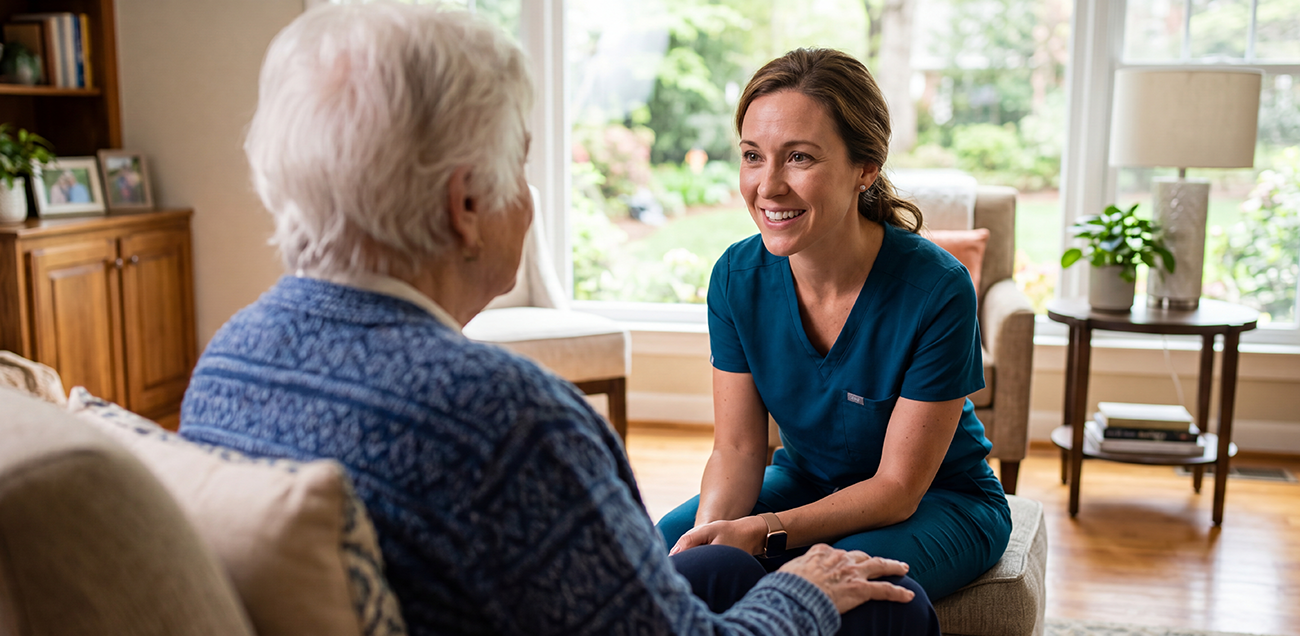
A Decade of Dedicated Care
Elizabeth Sammons began her career in personal assisting and home organization in Pinehurst, helping people create order and ease in their daily lives. What she found was something far greater than organizational need. The seniors she worked with were asking for connection, for medical support, for someone who would simply show up. That realization changed the direction of her career.
Since 2012, Elizabeth has dedicated her work to elder care in the Moore County area. She holds dual CNA certifications in CNA I & CNA II, is a certified geriatric aide in the state of North Carolina, and serves as an Engaged Brains Project Champion. Elizabeth Sammons, LLC is a registered care registry under the state of North Carolina.
Today, Elizabeth leads a team of more than 25 caregivers, each selected and placed with the same intentionality that has defined her work from the beginning. One of her greatest strengths is pairing the right caregiver to the right client — matching personalities, needs, and care styles in ways that make a genuine difference in quality of life. Elizabeth remains actively involved with every client and family she serves, ensuring that the standard of care her name represents is never delegated away, only extended.
Her approach is not clinical. It is personal. Every client she serves receives the same attentiveness she brought to her very first placement, and every family she works with is treated as a partner in the care of someone they love.
Service List
Elizabeth Sammons provides hands-on daily living support tailored to the individual needs of each client. Services are built around the activities of daily living that allow seniors to remain safe, comfortable, and well-cared-for in their own environment.
Care Built on Competence
Compassion matters, but so does knowledge. Every service Elizabeth provides is grounded in professional training and evidence-based care practices.
• Effective communication — clear, respectful dialogue with clients, families, and medical teams
• Basic medical knowledge — understanding of conditions common in aging populations, including dementia and brain change
• Infection control and safety practices — consistent adherence to hygiene and safety protocols
• Time management and organization — structured, dependable care routines that clients and families can count on